
Shoe Cabinet Design Ideas for Singapore Homes
TL;DR: Ventilation is the single most important design factor for a shoe cabinet in Singapore’s humidity. Choose a slim profile for narrow HDB entryways, a full-height cabinet for maximum capacity, or a bench-style unit for daily convenience, and always specify slatted doors, vented panels or air gaps to keep shoes fresh.
In Singapore homes, the entryway sets the tone for the whole home, and the shoe cabinet is usually its centrepiece. A well-designed shoe cabinet keeps footwear organised, clears clutter from the hallway, and makes a strong first impression. But in our humid climate, design is not just about looks: ventilation and the right materials matter just as much.
This guide covers shoe cabinet design ideas that work in Singapore HDB and condo homes.
Ventilation Is the Most Important Detail
In Singapore’s humidity, an unventilated shoe cabinet is an invitation to odour and damp. A well-designed cabinet should never be a completely sealed box. Good ventilation can be built in through several methods:
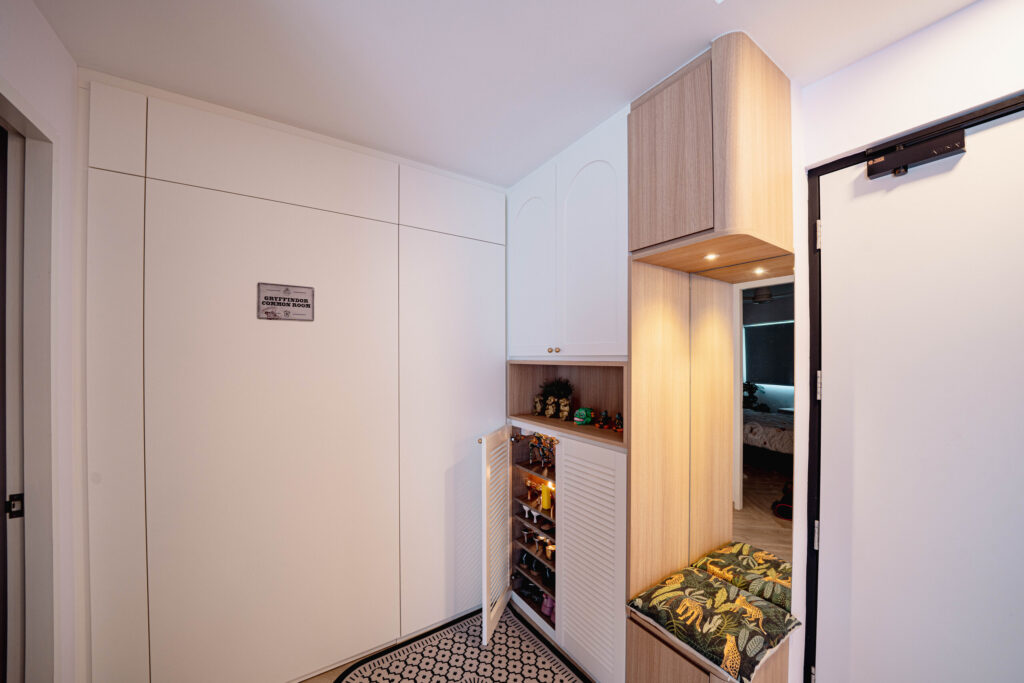
- Slatted or louvred doors that allow air to circulate
- Perforated or pegboard-style back panels that let air move from behind
- Discreet air gaps at the top and bottom of the cabinet, even a 1 to 2cm gap creates a natural airflow current
- Mesh or vented panels in enclosed compartments
A practical habit helps too: let shoes air out for an hour after wearing before storing them, and consider natural deodorisers like bamboo charcoal or cedar blocks to absorb moisture and odours. The combination of good ventilation in the design and good habits in daily use keeps shoes fresh.
Designs for Different Entryways
Slim Profile Cabinets for Narrow Hallways
Many HDB entryways and corridors are tight. A slimline cabinet with a shallow depth keeps the walkway clear while still providing storage. These can be built into walls or around pillars to reduce bulk, and they suit minimalist, clean entryways. Handleless, push-to-open doors keep the look uncluttered.
Full-Height Cabinets for Maximum Storage
Making a shoe cabinet as tall as possible maximises capacity and lets it blend in like a bookcase with the rest of the decor. The upper section can store off-season footwear and general items, while the everyday pairs sit at accessible height. This is the best approach when you have a wall to spare and a large shoe collection.
Bench-Style Shoe Cabinets
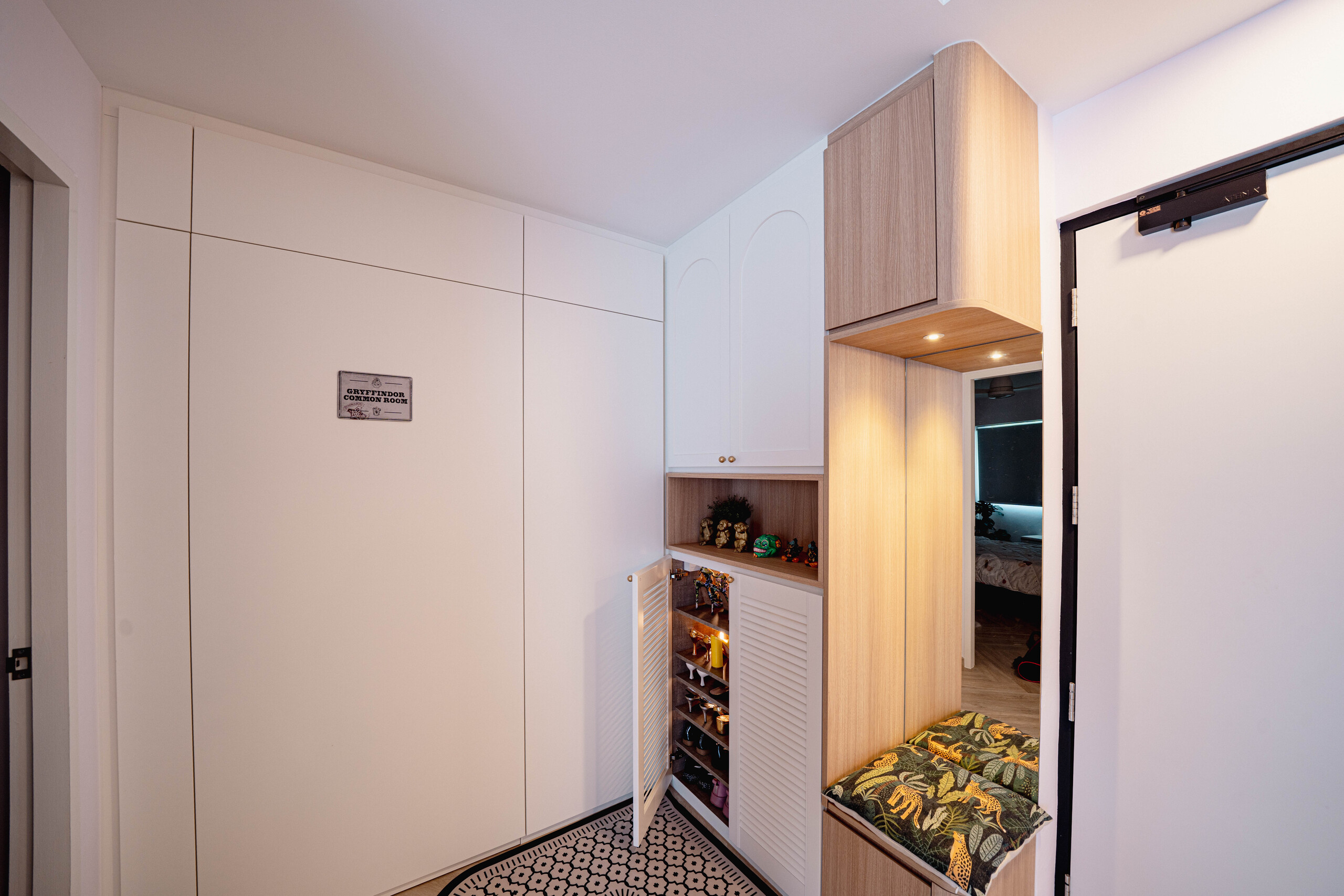
A bench-style cabinet combines a seating surface on top with shoe storage below. It gives you somewhere to sit while putting on and removing footwear, which is a genuine daily convenience. A cushion on the bench top adds comfort, and open slots at the base are handy for slippers or even a robot vacuum.
Floating Shoe Cabinets
A wall-mounted floating shoe cabinet keeps the floor clear underneath, which makes the entryway look more spacious and easier to clean. Adding a recessed open section at the bottom gives a convenient spot to slip everyday shoes in and out, or to park a robot vacuum out of sight.
Smart Internal Features
The inside of a shoe cabinet is where custom carpentry shines. Consider these features when planning yours:
- Adjustable or tilting shelves to fit heels, boots, sneakers, and flats
- Slanted compartments that increase capacity and let you see shoes at a glance
- Pull-out trays and drawers for socks and shoe-care items
- Concealed pull-out mechanisms for hidden full-height storage
- A dedicated section for soiled shoes, separated from clean storage
Custom dimensions matter here. The depth of empty corners in HDB flats often ranges from 20 to 30cm, which corresponds to the depth of most columns and is enough for a built-in shoe cabinet that uses otherwise wasted space.
Adding Function Beyond Shoes
An entryway shoe cabinet can do more than store shoes. Extending the design to include hooks for bags and keys, a shelf or drawer for small items like keys and masks, and upper closed cabinets for general storage turns it into a complete entryway unit. A mirror on or near the cabinet is useful for quick checks before leaving and makes the entrance feel more spacious.
Materials for Humidity
Because the entryway can be exposed to moisture from wet shoes and the outdoors, use moisture-resistant plywood or laminate boards for durability. Quality hardware such as soft-close hinges keeps doors closing quietly and precisely. The right material choice prevents the swelling and warping that cheaper boards suffer in our climate.
Frequently Asked Questions
How do I stop my shoe cabinet from smelling in Singapore’s humidity?
Build in ventilation from the start, such as slatted doors, a perforated back panel, or a small air gap at the top and bottom of the cabinet. Let shoes air out for about an hour before storing them, and use natural deodorisers like bamboo charcoal or cedar blocks inside the cabinet to absorb moisture and odour.
What is the ideal depth for a slim shoe cabinet in an HDB corridor?
Slim shoe cabinets for narrow HDB entryways typically range from 20cm to 30cm deep, which matches the depth of most structural columns and keeps the walkway clear while still holding a full row of shoes.
Can a shoe cabinet also be used as a bench?
Yes. A bench-style shoe cabinet combines a seating surface on top with shoe storage below. It is a popular design for Singapore entryways because it gives you somewhere to sit while putting on or removing shoes, and a cushion can be added for comfort.
What material should a shoe cabinet be made of in Singapore?
Moisture-resistant plywood or laminate boards are recommended for shoe cabinets, since the entryway is regularly exposed to moisture from wet shoes and outdoor humidity. Cheaper particleboard swells and warps more easily in these conditions.
How many pairs of shoes can a built-in cabinet realistically hold?
It depends on the height and shelf configuration, but a full-height custom cabinet for an HDB entryway typically holds 30 to 50 pairs. Slanted or tilting shelves increase capacity further compared to flat shelving.
Build a Shoe Cabinet Designed for Your Entryway
A custom shoe cabinet solves the storage, ventilation, and space problems that off-the-shelf units cannot. At More Than Wood, our custom shoe cabinet carpentry is built to your entryway dimensions with ventilation designed in, using E0-grade plywood and quality hardware.
We can build everything from a slim profile unit to a full entryway system with bench and upper storage. Reach out for a consultation and we will design a shoe cabinet that fits your entrance.
0 comments