
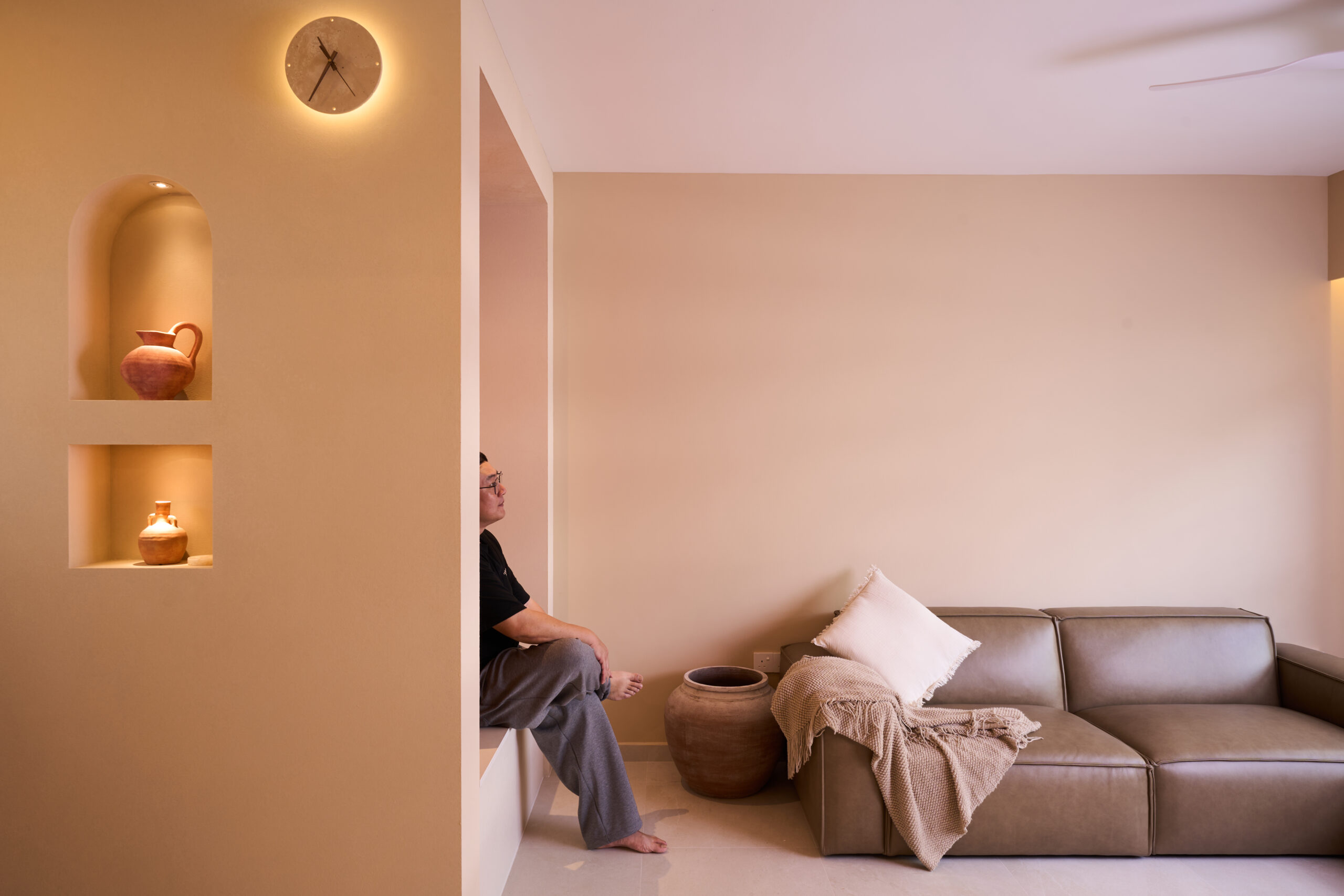
Feature Wall Ideas for Singapore Living Rooms
TL;DR: Feature the TV wall or the sofa wall, never both, and keep the remaining walls neutral for the strongest visual impact. Timber slats, fluted panels, laminate and built-in carpentry feature walls all work well in Singapore homes, with carpentry feature walls offering the added benefit of hidden storage built into the design.
A feature wall is the visual anchor of a living room, the surface your eye is drawn to when you walk in. In Singapore homes, where living rooms often serve as the main space for entertaining, relaxing, and sometimes dining, a well-designed feature wall defines the room’s character without consuming any floor space. For compact HDB living rooms, it is one of the most space-efficient design investments you can make.
This guide covers the most effective feature wall ideas for Singapore homes and how to choose the right one.
Why a Feature Wall Works So Well Here
Singapore homes work within compact floor plans where every design decision carries weight. A feature wall concentrates visual impact onto a single surface, creating depth and a sense of scale without taking up room. In open-plan HDB living-dining layouts, a distinct wall treatment also helps define zones, providing visual separation between the living area and the dining space. The key principle is restraint: treat one wall distinctively and keep the others neutral. Treating several walls boldly creates visual competition rather than a focal point.
Choosing Which Wall to Feature
Choosing the wall matters as much as choosing the treatment. In most Singapore living rooms, there are two strong candidates.
The TV Wall
This is the wall where the television is mounted or the media console sits. Since all the seating faces it, it receives the most attention. A feature treatment here frames the entertainment area and stops the TV from floating awkwardly on a blank wall.
The Sofa Wall
This is the wall behind the main sofa, the one guests face when seated and often the first wall visible from the entrance. A feature treatment here creates a backdrop that frames the seating arrangement. Avoid featuring the wall with the main window, since natural light creates its own interest and competes with any surface treatment, and avoid walls broken up by doors.
Feature Wall Materials and Styles
Timber Slat and Fluted Panels
Vertical timber slats and fluted panels have become one of the most popular feature wall choices in Singapore homes. The vertical lines create depth and warmth that flat paint cannot match, and they suit Japandi and Scandinavian interiors particularly well. Horizontal slats are an alternative that visually widens a room and works nicely behind a TV console or sofa. Fluted panels come in solid wood, MDF, and moisture-resistant composite options.
Laminate Feature Walls
Laminate offers a clean, graphic look in hundreds of colours and textures, including concrete, marble, plain colour, and wood grain effects. It is durable, easy to clean, and far more cost-effective than natural stone, which makes it a practical choice for a hardworking living room wall.
Built-In Carpentry Feature Walls
This is where a feature wall becomes truly functional. Built-in carpentry combines the visual statement with integrated storage, shelving, and a TV console in one cohesive design. Constructed from engineered wood and finished with laminate or veneer, these walls are highly customisable and popular for maximising space in Singapore homes. You get both the focal point and the storage in a single built element.
Wallpaper and Mirrored Panels
Wallpaper is the most accessible feature wall medium, with designs ranging from washi textures to botanical prints. Large-scale patterns work best confined to a single wall. Mirrored and glass panels reflect light and create an illusion of greater space, making them useful in smaller rooms, though they require careful placement to avoid awkward reflections.
Solving Awkward Layouts
Feature walls are also a practical tool for fixing common HDB living room problems. Narrow rooms benefit from a floating TV console paired with vertical wood panels, which draws the eye upward and creates an illusion of height. Rooms with sharp angles or protruding corners can be softened with a curved or wrapped feature wall. The right design turns an awkward layout into a deliberate one.
Integrating Storage Behind the Feature Wall
One of the biggest advantages of a carpentry feature wall is hidden storage. Concealed cabinets, push-to-open panels, and floating display shelves can all be built into the feature wall structure. This keeps the living room feeling open while solving the storage problems that would otherwise require additional freestanding furniture. In smaller HDB living rooms, this dual function is often what makes the difference between a cluttered room and a calm one.
Frequently Asked Questions
Which wall in the living room should I turn into a feature wall?
The TV wall or the sofa wall are the two strongest choices. The TV wall gets attention because all seating faces it, while the sofa wall is what guests see when seated and often the first wall visible from the entrance. Avoid the window wall, since natural light already competes for attention there.
Should I feature more than one wall in the living room?
No. The key principle behind an effective feature wall is restraint. Treating a single wall distinctively while keeping the others neutral creates a clear focal point. Treating multiple walls boldly creates visual competition and can make the room feel busy rather than intentional.
What is the difference between a fluted panel wall and a laminate feature wall?
Fluted panels have a vertical grooved texture that adds physical depth and warmth to the wall, popular in Japandi and Scandinavian interiors. Laminate feature walls are flat but offer a huge range of colours and textures, including marble and concrete effects, at a lower cost than natural stone.
Can a feature wall include hidden storage?
Yes. A built-in carpentry feature wall can integrate concealed cabinets, push-to-open panels, and floating display shelves directly into the structure. This is one of the main advantages of a carpentry feature wall over a purely decorative treatment like wallpaper or paint.
How can a feature wall fix an awkward living room layout?
A feature wall can be used strategically to solve layout problems. In a narrow room, vertical wood panels paired with a floating console draw the eye upward and create an illusion of height. In a room with sharp corners, a curved or wrapped feature wall can soften the awkward angles.
Build a Feature Wall That Does More Than Look Good
A feature wall is most powerful when it combines style with function. At More Than Wood, our custom feature wall carpentry integrates timber slats, laminate panels, and hidden storage into designs built to your exact wall dimensions. We produce 3D drawings so you can see the finished wall before fabrication begins.
If you are planning a living room refresh and want a feature wall that anchors the room and adds storage, reach out for a consultation.
0 comments