
Built-In vs Freestanding Wardrobe in Singapore: Which Should You Choose?
TL;DR: Built-in wardrobes maximise storage and give a seamless, permanent finish, making them the stronger choice for homeowners settling in long term. Freestanding wardrobes cost less upfront and can move with you, which suits renters or anyone who rearranges often. Whichever you choose, a plywood carcass handles Singapore’s humidity better than particleboard.
Choosing a wardrobe is one of the bigger decisions in a bedroom renovation. It shapes how much you can store, how the room looks, and how easy your daily routine feels. In Singapore, where bedrooms in HDB flats and condos are compact and every square metre matters, the choice between a built-in and a freestanding wardrobe is especially important.
This guide compares the two honestly so you can decide which suits your home, your budget, and your plans.
What Is a Built-In Wardrobe?
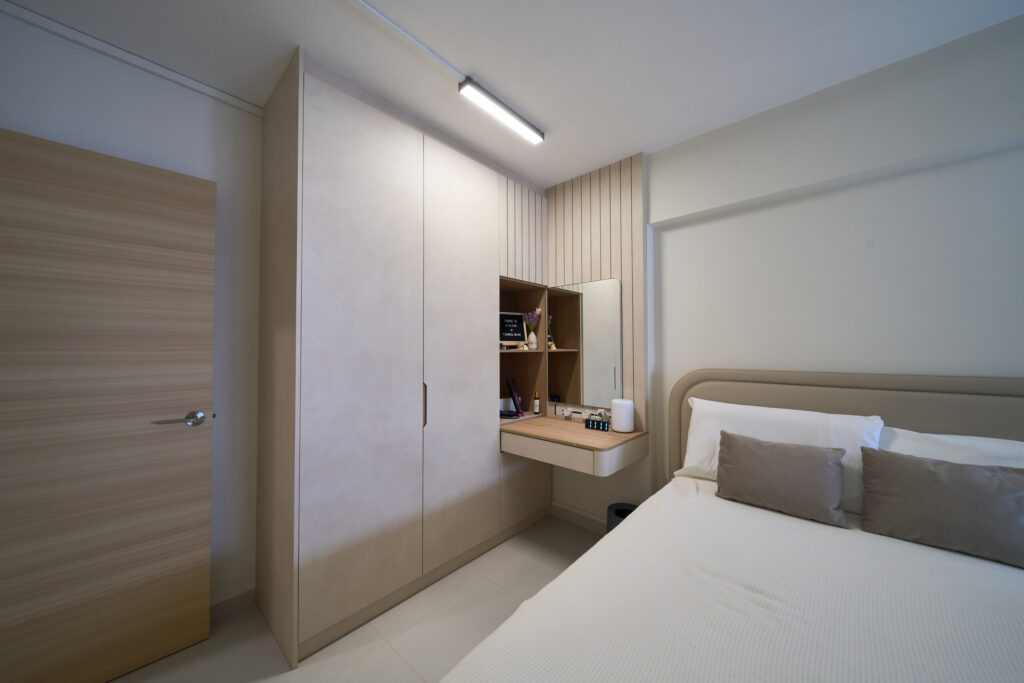
A built-in wardrobe is custom-designed and integrated into your room, usually running from floor to ceiling and wall to wall. It is fixed in place and tailored to the exact dimensions of your space. Because it is made to measure, there are no awkward gaps and no wasted corners. It becomes part of the room’s architecture rather than a separate piece of furniture sitting against a wall.
What Is a Freestanding Wardrobe?
A freestanding wardrobe is a self-contained unit you buy and place in the room. It is ready to use almost immediately and can be moved between rooms or taken with you when you relocate. It comes in standard dimensions, which means it rarely fits a room perfectly but offers convenience and flexibility in return.
Comparing the Two
Space Efficiency
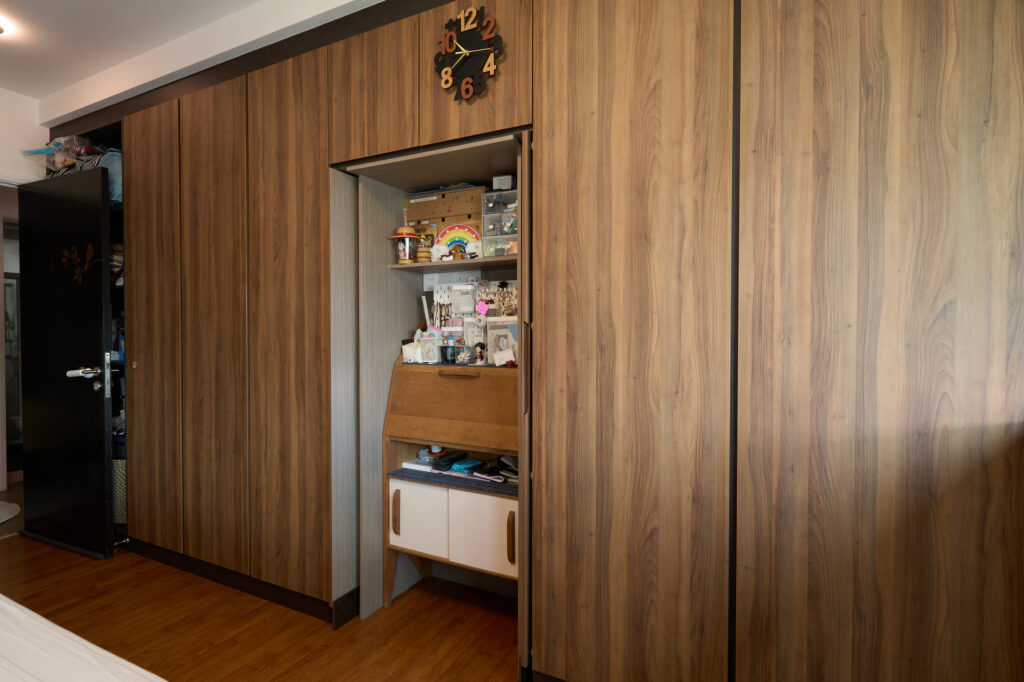
This is where built-in wardrobes win clearly. A freestanding unit is a box that sits in the room, leaving gaps at the sides and a dead zone on top that collects dust. A built-in wardrobe uses every inch, including the full ceiling height and any alcoves or irregular angles. In a compact HDB bedroom, this difference in usable storage is significant.
Fit and Appearance
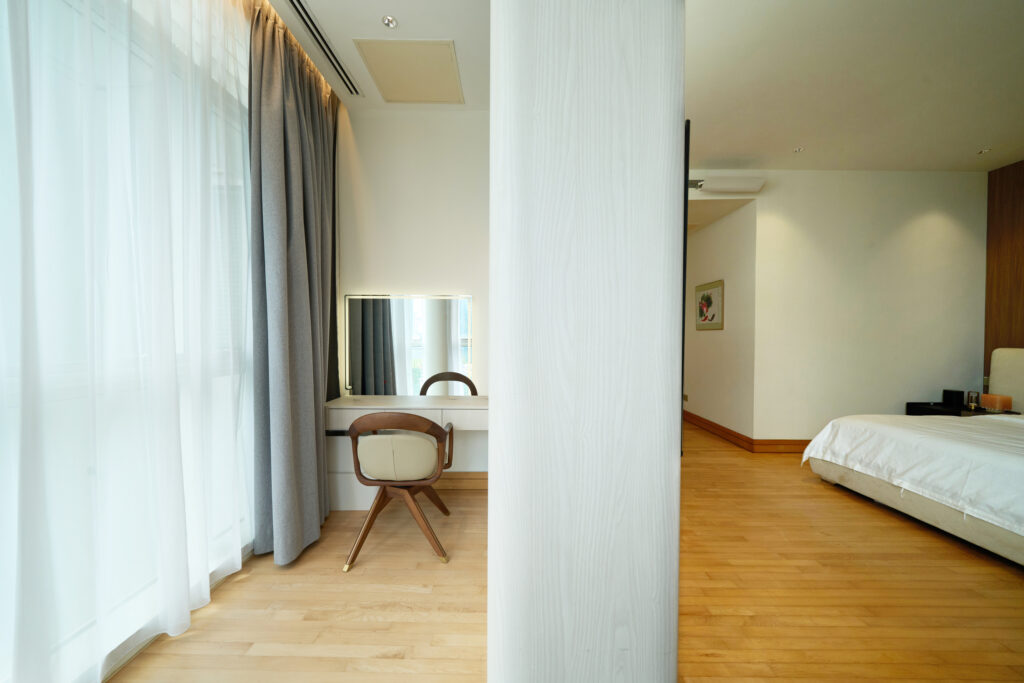
Built-in wardrobes blend seamlessly with the room for a clean, integrated look. They can be designed to match the rest of your interior and to wrap around columns, beams, or sloped sections that would defeat a standard wardrobe. Freestanding wardrobes have a more furniture-like presence, which some homeowners prefer, but they cannot achieve the same flush, architectural finish.
Cost
Freestanding wardrobes generally have a lower upfront cost. You are buying a manufactured product rather than commissioning custom carpentry. Built-in wardrobes cost more initially because of the bespoke design, materials, and installation. The trade-off is that a built-in is a long-term investment in your home that can add to its appeal when you eventually sell.
Flexibility
Freestanding wins on flexibility. If you rent, move often, or like to rearrange your rooms, a freestanding wardrobe can come with you and be repositioned. A built-in is permanent and suits homeowners who plan to stay in the property for years.
Customisation
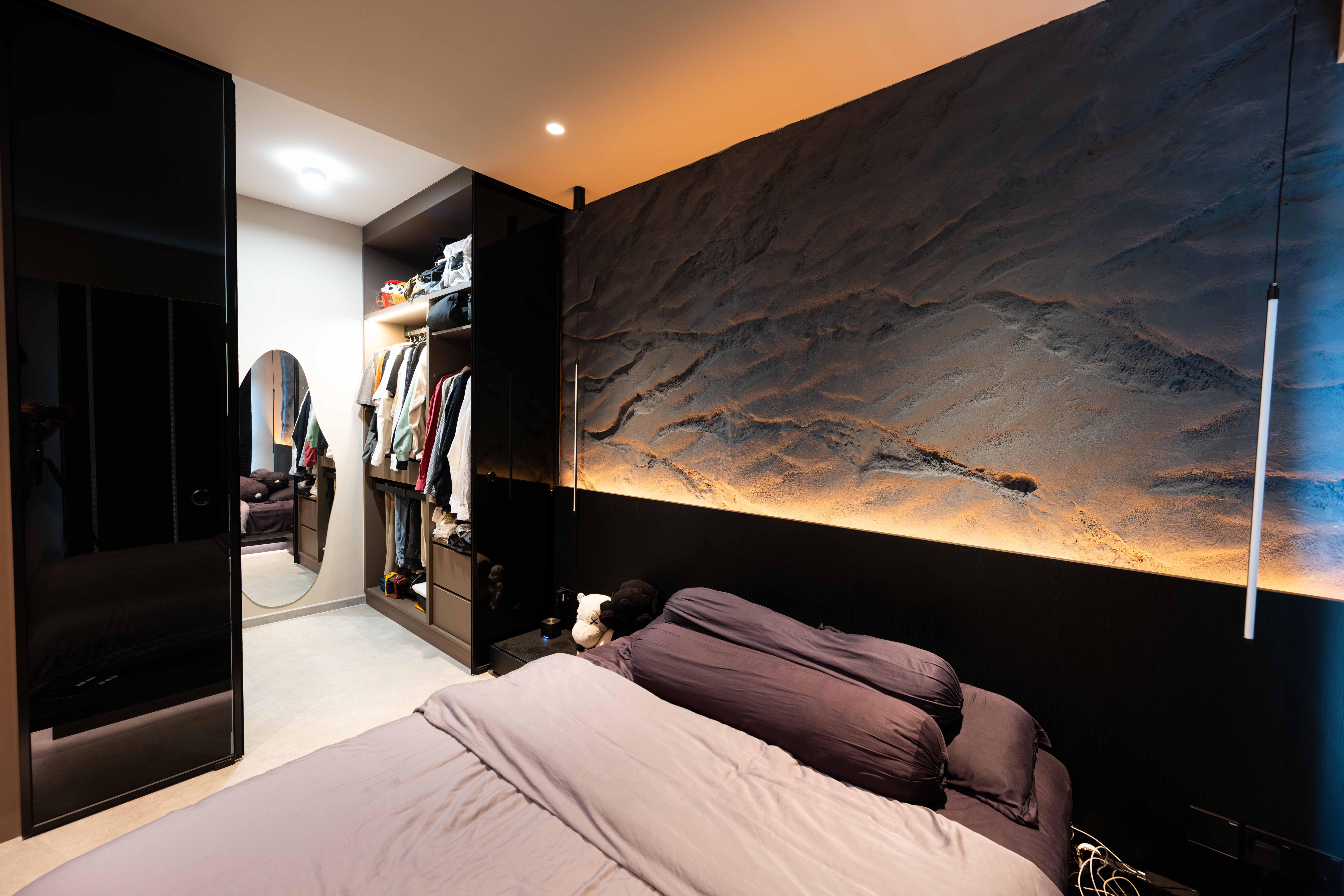
Built-in wardrobes allow full control over the internal layout. You decide the mix of hanging space, drawers, shelves, and accessory sections based on how you actually store your clothing. Freestanding units come in fixed configurations, so you adapt to the product rather than the other way around.
A Note on Materials and Humidity
Whichever route you choose, material quality matters in Singapore’s humidity. Built-in wardrobes using plywood carcasses are generally more dimensionally stable than particleboard, because plywood’s cross-grain construction resists swelling more effectively in humid conditions.
If you are specifying a built-in for a room with humidity concerns, plywood carcassing is worth the incremental cost. For freestanding units, ask about the board grade and look for moisture-resistant materials.
Which Should You Choose?
There is no universally better option. The right choice depends on your situation.
- Choose a built-in wardrobe if you own your home, want to maximise storage, value a seamless look, and plan to stay long term
- Choose a freestanding wardrobe if you rent, move frequently, want a lower upfront cost, or like the flexibility to rearrange
For most Singapore homeowners who have just collected the keys to a BTO or resale flat and intend to settle in, a built-in wardrobe is the stronger long-term decision. It solves the space problem that standard wardrobes cannot, and it makes a compact bedroom feel intentional rather than cluttered.
Frequently Asked Questions
Is a built-in wardrobe worth the extra cost compared to a freestanding one?
For homeowners planning to stay long term, yes. A built-in wardrobe uses the full ceiling height and any awkward corners, which a freestanding unit cannot, and it can add to your home’s appeal when you eventually sell. If you rent or move often, the lower upfront cost and portability of a freestanding wardrobe may suit you better.
Can a built-in wardrobe be moved if I relocate?
No. A built-in wardrobe is fixed to the room and designed around its exact dimensions, so it cannot be dismantled and reinstalled elsewhere. This is the main trade-off against a freestanding wardrobe, which can be moved between rooms or homes.
What material should a built-in wardrobe carcass be made of in Singapore?
Plywood is recommended over particleboard for Singapore’s humidity. Plywood’s cross-grain construction resists swelling and warping more effectively than particleboard, making it more dimensionally stable in humid bedroom conditions over the years.
Can a built-in wardrobe be designed around a column or sloped ceiling?
Yes, this is one of the main advantages of a built-in wardrobe. Because it is custom designed for your specific room, it can be built to wrap around columns, beams, or sloped sections that would leave an awkward gap with a standard freestanding unit.
How much storage difference is there between built-in and freestanding wardrobes?
The difference can be significant in a compact HDB bedroom. A freestanding wardrobe leaves gaps at the sides and an unused space on top, while a built-in wardrobe extends to the full ceiling height and fits flush into any alcove, meaning more usable storage in the same amount of wall space.
Build a Wardrobe That Fits Your Room Exactly
If a built-in wardrobe is the right fit, the next step is working with a carpenter who designs around your specific room. At More Than Wood, our custom built-in wardrobe carpentry is measured to your space, built with E0-grade plywood, and configured to how you actually organise your clothing. We produce 3D drawings so you can see the design before fabrication.
Get in touch for a consultation and we will help you plan a wardrobe that uses every inch of your bedroom.
0 comments