
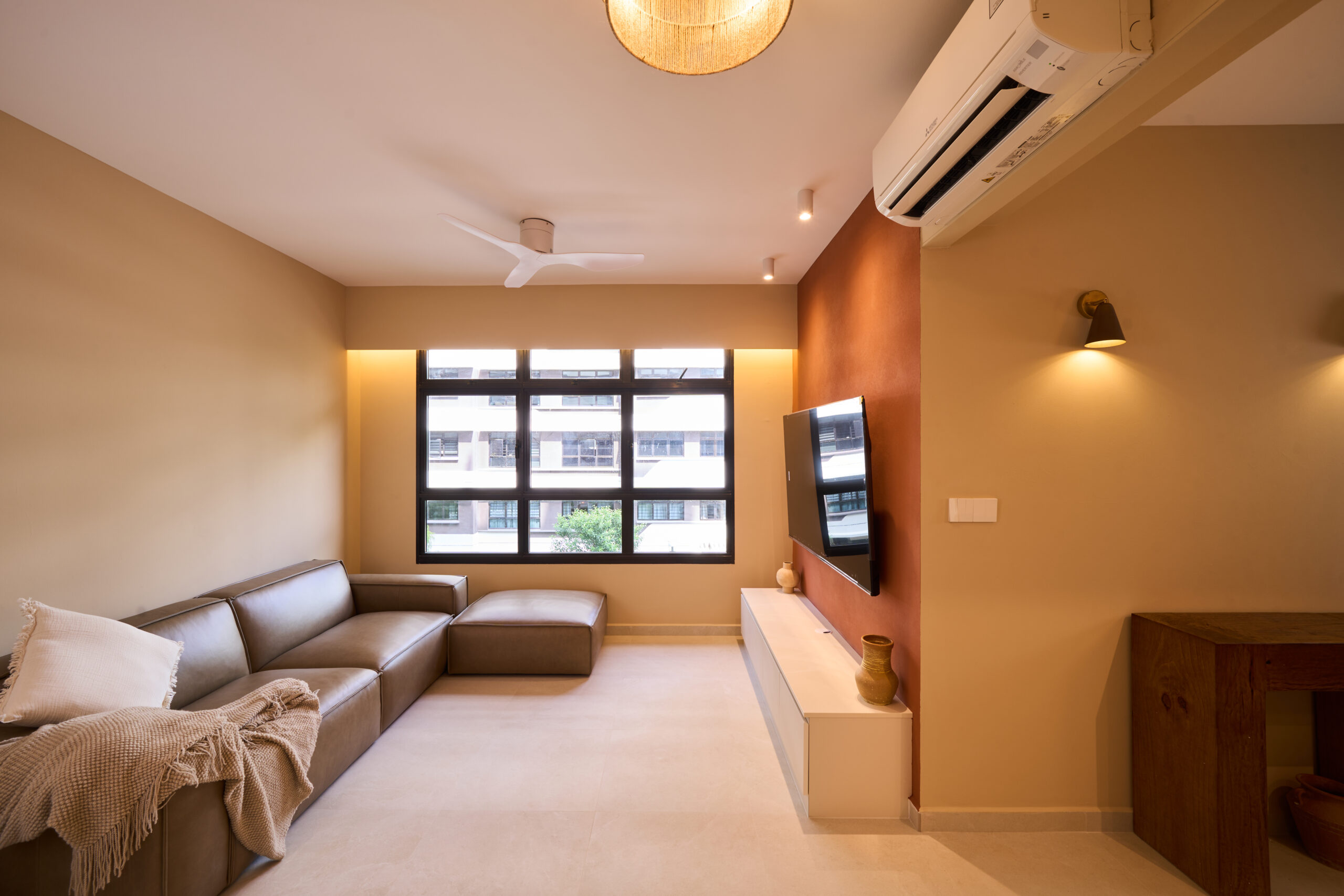
TV Console Design Ideas for Singapore Living Rooms
TL;DR: Floating consoles suit narrow living rooms, floor-standing units maximise storage for media-heavy households, and concealed consoles hide the TV entirely when not in use. Whichever style you choose, plan cable management and equipment ventilation into the design from the start, and size the console to match the width of the TV.
The TV console is one of the most used pieces of furniture in any living room, and in Singapore homes it often has to work hard in a small footprint. A well-designed console holds your media equipment, hides the cable clutter, and ties the living room together visually.
This guide covers the most practical and stylish TV console design ideas for Singapore homes, with a focus on what works in compact HDB and condo living rooms.
Why Consider a Custom Built-In Console
Off-the-shelf consoles rarely fit a room perfectly, especially if your living room has an irregular layout, awkward pillars, or beams. A custom built-in TV console is made to the exact width of your wall and the storage needs of your household. Because it blends seamlessly into the wall, a large built-in piece can actually look more slender than a bulky freestanding unit. It also keeps cables out of view and can be designed as part of a feature wall that frames the television.
Popular TV Console Configurations
Floating Consoles
Wall-mounted floating consoles have no legs touching the floor, which creates a light, modern look and makes cleaning underneath easy. To enhance the floating effect, you can install recessed or spotlighting underneath. Floating consoles work especially well in narrow living rooms, where a shallow depth keeps the walkway clear while still providing storage.
Floor-Standing Consoles With Storage
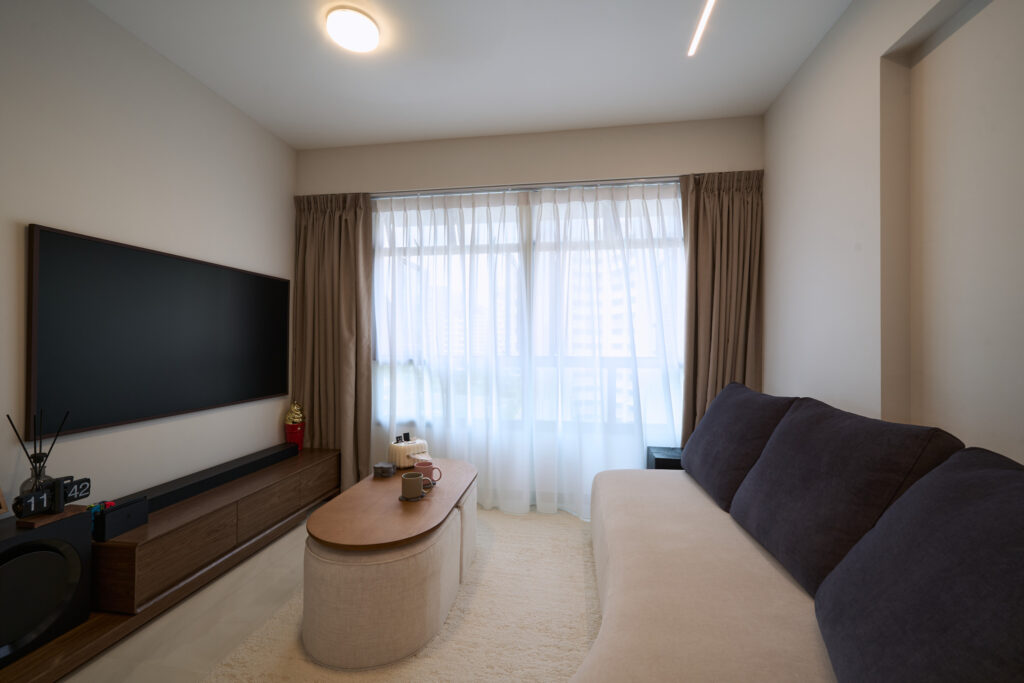
For families who need more storage, a floor-standing console with a mix of drawers, cabinets, and open shelving offers maximum capacity. Closed storage keeps clutter out of sight, while open shelving displays decorative items and allows easy access to frequently used equipment. This configuration suits households with a lot of media accessories.
Concealed Consoles
A concealed console hides the television and equipment behind sliding panels or wooden grilles when not in use. This is ideal for homeowners who do not want a black screen dominating the living room at all times. Sliding wooden grilles or a feature wall that slides open and shut can turn the TV area into a clean, integrated surface when the TV is off.
Full-Height Media Walls
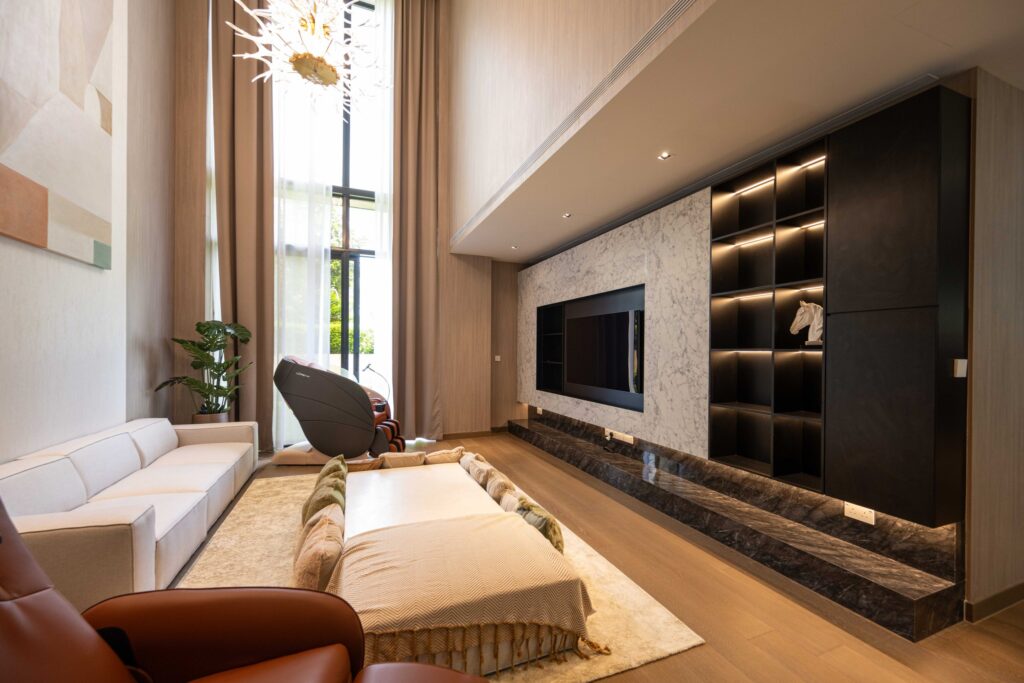
Integrating the console into a full-height storage unit turns the entire TV wall into a combination of display and concealed storage. This approach maximises vertical space and is particularly useful in HDB living rooms where floor space is limited but wall height is available.
Don’t Forget Cable Management
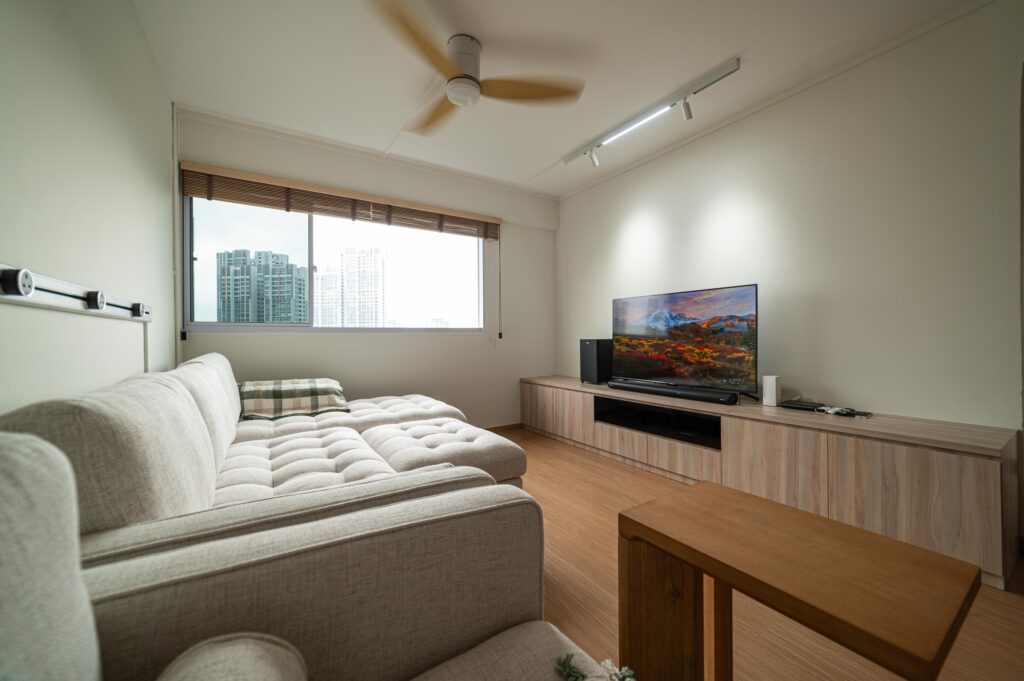
Cable management is the detail that separates a tidy console from a messy one, yet it is often overlooked. When planning a built-in console, design in routing channels and grommets for cables, a ventilated space for set-top boxes and gaming consoles, and a discreet housing for the WiFi router. Planning this at the design stage means no loose cables running across the surface and no overheating equipment crammed into a sealed box.
Materials and Finishes
TV consoles can be finished to match the rest of your living room carpentry. Common options include:
- Oak and walnut veneer for warmth and natural character
- Matte laminate, which hides fingerprints and is easy to clean
- High-gloss laminate for a polished, modern edge
- Quartz, granite, or sintered stone tops used sparingly for a refined accent
- Fluted panel fronts to tie the console into a feature wall
Choosing a finish that coordinates with your feature wall and other carpentry gives the living room a cohesive, designed look rather than a collection of separate pieces.
Sizing the Console to the TV
As a practical rule, the console should be slightly wider than or the same width as the television to provide proper visual balance and a secure setup. The TV should not overhang the console. For viewing comfort in a small living room, experts suggest the screen size should relate to your viewing distance, so do not oversize the TV for a compact space.
Frequently Asked Questions
Should a TV console be floating or floor-standing?
It depends on your storage needs and room size. A floating console suits narrow living rooms, since it keeps the floor visible and easy to clean, and it creates a lighter, more modern look. A floor-standing console offers more storage capacity, which suits households with a lot of media equipment or accessories.
How wide should a TV console be compared to the television?
As a general rule, the console should be slightly wider than or the same width as the TV. This provides proper visual balance and ensures the television does not overhang the console, which can look unstable and off-proportion.
How do I hide cables behind a TV console?
Plan for cable management at the design stage rather than after installation. This means building in routing channels and grommets for cables, a ventilated compartment for set-top boxes and gaming consoles, and a discreet spot for the WiFi router, so nothing runs loose across the surface.
Can a TV console hide the television completely when it’s not in use?
Yes. A concealed console design uses sliding wooden panels or grilles that close over the TV area when the television is off, turning it into a clean, integrated wall surface. This suits homeowners who don’t want a black screen as the room’s permanent focal point.
What materials work best for a TV console in a humid Singapore living room?
Matte laminate is a popular, practical choice because it hides fingerprints and is easy to clean, and it holds up well to daily use. Oak or walnut veneer adds warmth for a more premium look, while quartz or sintered stone can be used sparingly as an accent surface.
Build a TV Console That Fits Your Living Room
A custom TV console solves the storage and cable problems that off-the-shelf units cannot. At More Than Wood, our custom TV console carpentry is built to your wall dimensions with integrated storage and cable management designed in from the start. We can build the console as part of a complete feature wall for a seamless look.
Reach out for a consultation and we will design a console that suits your living room and your equipment.
0 comments