
Best Bathroom Vanity Material in Singapore: A Guide to 4 Moisture-Resistant Options
TL;DR: Marine plywood is the strongest carcass material for Singapore bathrooms, with MR plywood a solid mid-range alternative for well-ventilated spaces. Avoid standard MDF and particleboard in wet zones entirely. Just as important as the material itself is proper edge sealing, since exposed end grain is where most moisture damage begins.
A bathroom vanity faces the toughest conditions of any cabinet in your home. Constant humidity, splashes from the basin, and steam from showers all attack the materials over time. In Singapore, where bathrooms are humid year-round and ventilation is often limited, choosing the wrong material means a vanity that swells, warps, or delaminates within a few years. This guide explains the best bathroom vanity materials for our climate and why the details of construction matter as much as the material itself.
Why Material Choice Is Critical in a Bathroom
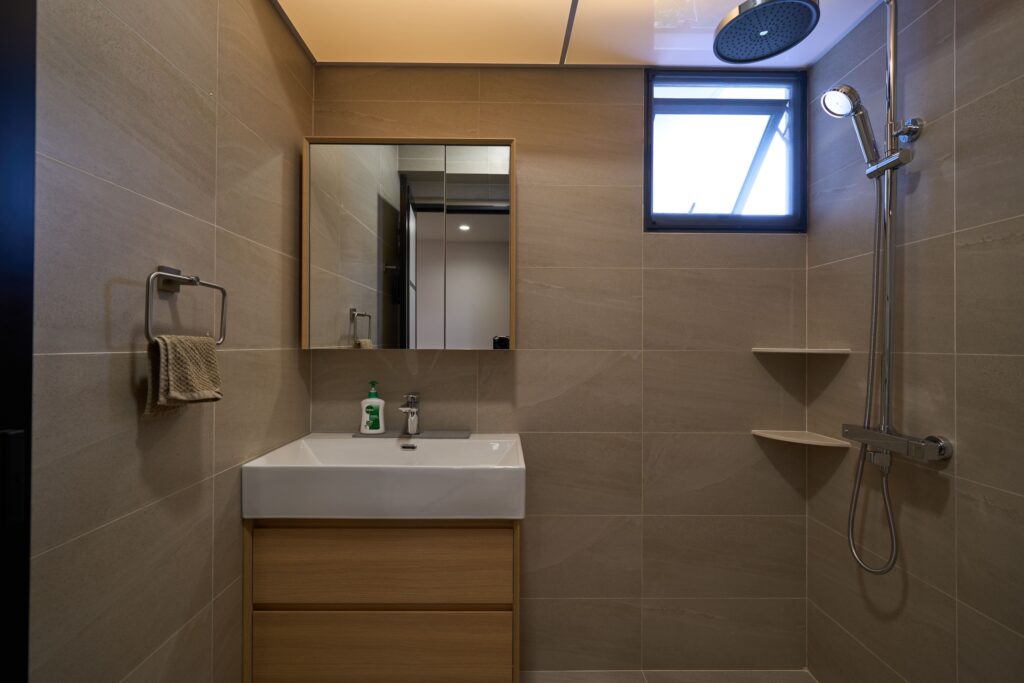
Wood is a hygroscopic material, meaning it absorbs and releases moisture from the air, expanding and contracting as it does. In a non-ventilated Singapore bathroom, that constant movement is what causes cabinets to crack, swell, and fail. The goal is to choose a material that resists moisture and stays dimensionally stable, then to construct and seal it properly. Both parts matter: even a good material will fail if the edges are left exposed.
Comparing the Materials
1 Marine Plywood
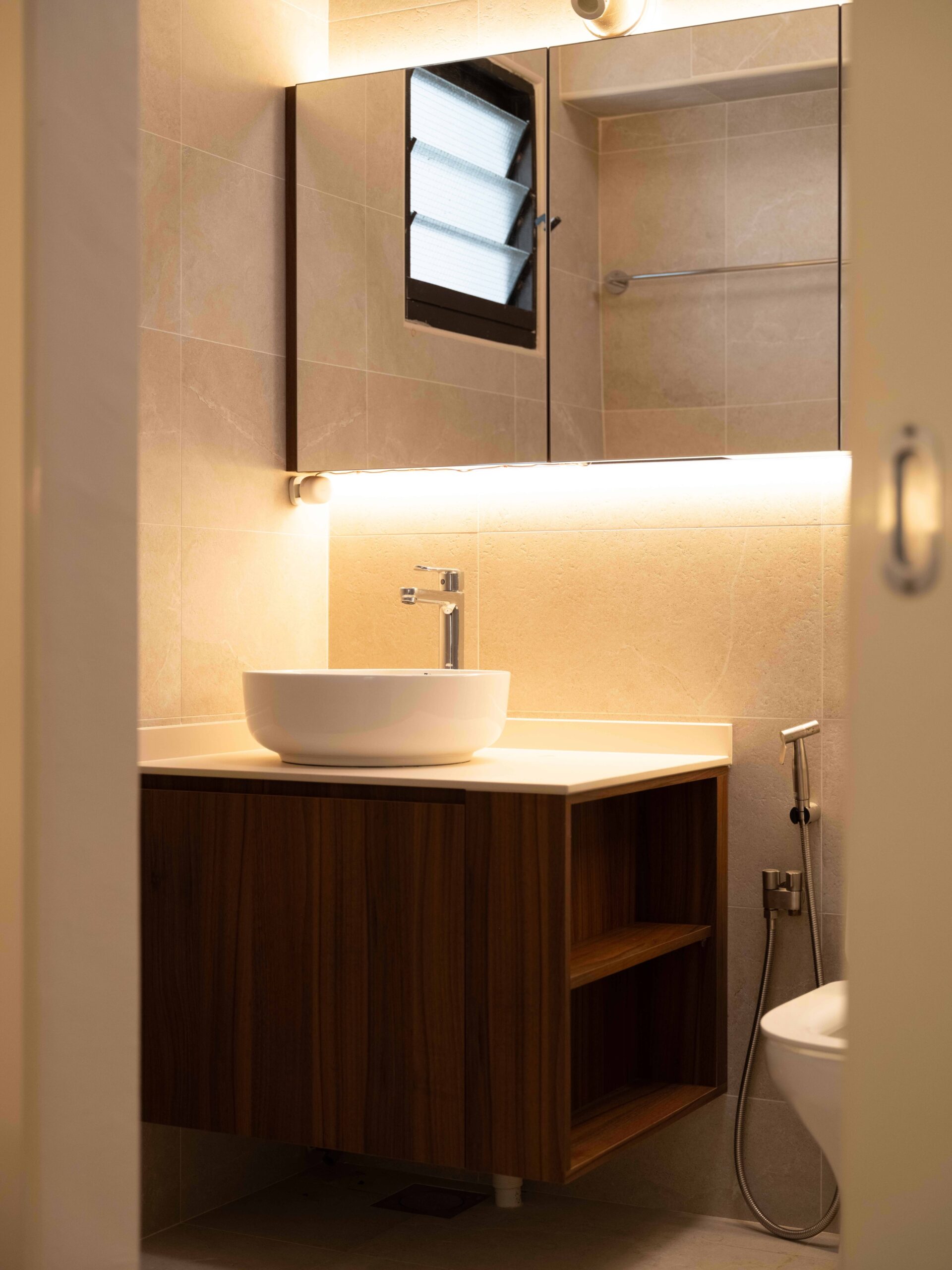
Marine plywood is the gold standard for bathroom vanity carcasses where maximum moisture resistance is needed. It uses waterproof adhesives between its layers and is manufactured to resist delamination in wet conditions. Each layer is bonded uniformly to prevent gaps where water could seep through. Where standard moisture-resistant plywood might resist dampness for a short time, marine-grade board is built to endure constant humidity for years. It is ideal for vanity carcasses, partitions, and concealed storage that face frequent moisture and steam.
2 Moisture-Resistant (MR) Plywood
MR plywood offers good moisture resistance at a more accessible price than marine board. It performs well in bathrooms with reasonable ventilation and is a sensible mid-range choice. The key difference from marine board is endurance: MR plywood handles humidity and the occasional splash, but for the wettest zones and for long-term durability, marine board is the safer specification.
3 Solid Wood
Solid wood is beautiful but high-risk in a humid bathroom. Because it expands and contracts with humidity changes, solid wood can warp or crack over time in a non-ventilated Singapore bathroom. It also requires regular sealing and careful maintenance and is the most expensive option. Hardwoods like teak can perform if properly kiln-dried and maintained, but for most bathrooms, engineered plywood is the more reliable choice.
4 MDF and Moisture-Resistant MDF
Standard MDF should be avoided in bathrooms, as it absorbs water readily and swells. Moisture-resistant MDF performs acceptably in dry-to-moderate humidity areas and takes a smooth painted finish, but for areas with constant moisture or water contact, plywood is the better choice. MDF is best reserved for elements away from direct water exposure.
Surface Finishes for Bathroom Vanities
The carcass handles the structure, but the surface finish protects it and provides the look. Moisture-resistant laminates are the practical choice, designed to resist warping, swelling, and surface degradation in humid conditions. They come in a wide range of colours and textures including matte, gloss, wood grain, and stone effect. Matte laminate has the practical benefit of hiding fingerprints and water splashes better than gloss. For a premium look, wood veneer or lacquer finishes can be used, though they need careful sealing.
The Detail That Makes or Breaks a Vanity: Edge Sealing
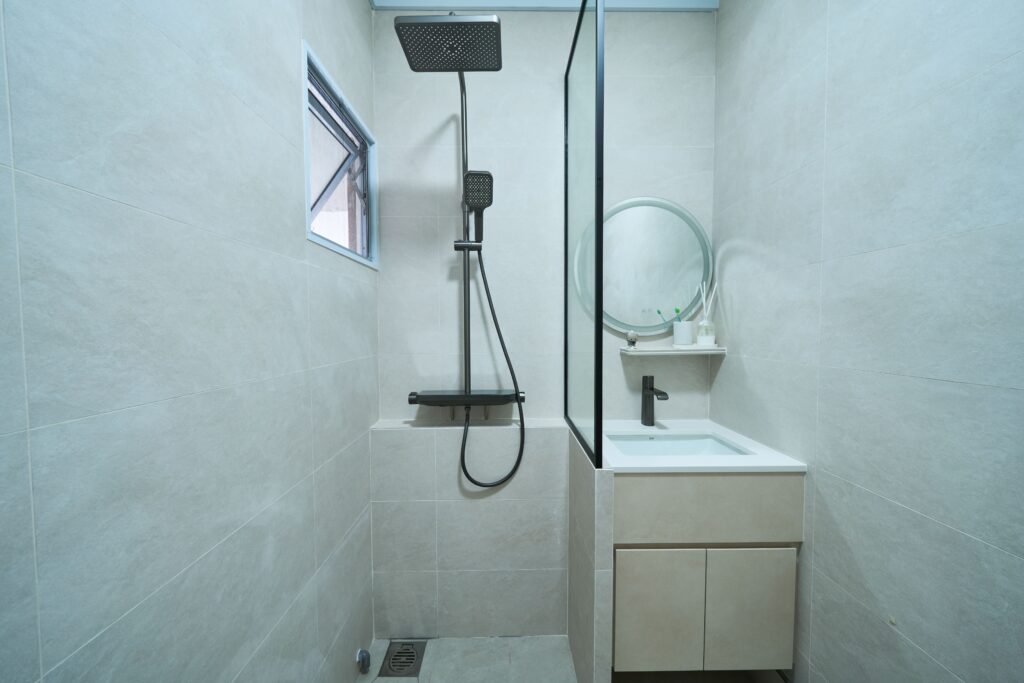
Even the best material will fail if water gets into the exposed end grain. This is the single most important construction detail in bathroom carpentry. All cut edges and faces must be sealed properly to prevent moisture from wicking in. Quality edge banding and proper sealing on every side, not just the visible ones, is what allows a plywood vanity to last for years in a humid bathroom. When comparing quotes, ask specifically how the edges are sealed.
Hardware for Bathroom Environments
Hardware also has to cope with moisture. Soft-close hinges and drawer runners from quality brands keep the vanity functioning smoothly, and for bathroom use, hardware with appropriate corrosion resistance ensures the mechanisms do not rust or stiffen over time. Good hardware is a small part of the cost but a large part of the daily experience.
Matching Material to Your Bathroom
For most Singapore bathrooms, the strongest specification is a marine or moisture-resistant plywood carcass with a moisture-resistant laminate finish and properly sealed edges. This combination handles our humidity, resists warping, and lasts. Reserve solid wood for controlled environments and avoid standard MDF and particleboard in any wet zone.
Frequently Asked Questions
What is the best material for a bathroom vanity in Singapore?
Marine plywood is the strongest choice for maximum moisture resistance, using waterproof adhesives to resist delamination in wet conditions. Moisture-resistant (MR) plywood is a solid mid-range alternative for bathrooms with reasonable ventilation. Avoid standard MDF and particleboard, which absorb water and swell easily.
What is the difference between marine plywood and MR plywood?
Both resist moisture better than standard plywood, but marine plywood is built to endure constant humidity and steam for years, using waterproof adhesives throughout. MR plywood handles humidity and occasional splashes well but is better suited to bathrooms with reasonable ventilation rather than the wettest zones.
Why does edge sealing matter for a bathroom vanity?
Water enters through exposed end grain at cut edges, not through the flat surfaces of the board. Even a good moisture-resistant material will fail if the edges are left unsealed. Proper edge banding and sealing on every side, not just the visible ones, is what allows a vanity to last in a humid bathroom.
Can solid wood be used for a bathroom vanity in Singapore?
It can, but it carries more risk. Solid wood expands and contracts with humidity changes and can warp or crack over time in a non-ventilated bathroom. It also requires regular sealing and maintenance. Properly kiln-dried hardwoods like teak can perform well, but engineered plywood is the more reliable choice for most bathrooms.
Does bathroom vanity hardware need to be different from kitchen hardware?
Yes, ideally. Bathroom hardware such as hinges and drawer runners should have appropriate corrosion resistance so the mechanisms do not rust or stiffen from constant moisture exposure. This is a small part of the overall cost but has a large effect on how smoothly the vanity functions over time.
Build a Bathroom Vanity That Survives the Climate
The right material, built and sealed correctly, is what makes a vanity last in Singapore’s humidity. At More Than Wood, our custom bathroom vanity carpentry uses marine plywood where maximum moisture resistance is required, moisture-resistant laminate finishes, and properly sealed edges, with corrosion-resistant hardware.
Reach out for a consultation and we will help you specify a vanity built to last in your bathroom.
0 comments