
Best Kitchen Cabinet Material in Singapore: Laminate vs Plywood vs Solid Surface
Choosing the right kitchen cabinet material is one of the most important decisions you will make during a renovation. In Singapore, the choice is not only about looks and budget. Our climate plays a major role. With average relative humidity sitting above 80 percent for most of the year, the material that sits inside your cabinets matters just as much as the finish on the outside. A cabinet that looks beautiful on installation day can swell, warp, or delaminate within a few years if the wrong material was used.
This guide breaks down the most common kitchen cabinet materials used in Singapore homes, what each one does well, and where each one falls short. The aim is to help you ask the right questions before you commit to a quote.
Why Material Choice Matters More in Singapore
Humidity is the silent enemy of kitchen carpentry. Materials that perform well in dry climates can fail quickly in a tropical environment. Cabinets are also exposed to heat from cooking, splashes from the sink, and the daily wear of opening and closing doors. The carcass, which is the structural box of the cabinet, takes the most punishment because it is rarely visible and often overlooked when comparing quotes. A low-grade carcass is where corners are most commonly cut.
It helps to think of a cabinet in two parts: the carcass, which is the internal structure, and the surface finish, which is what you see and touch. Both need to be chosen with the climate in mind.
Cabinet Carcass Materials
Plywood
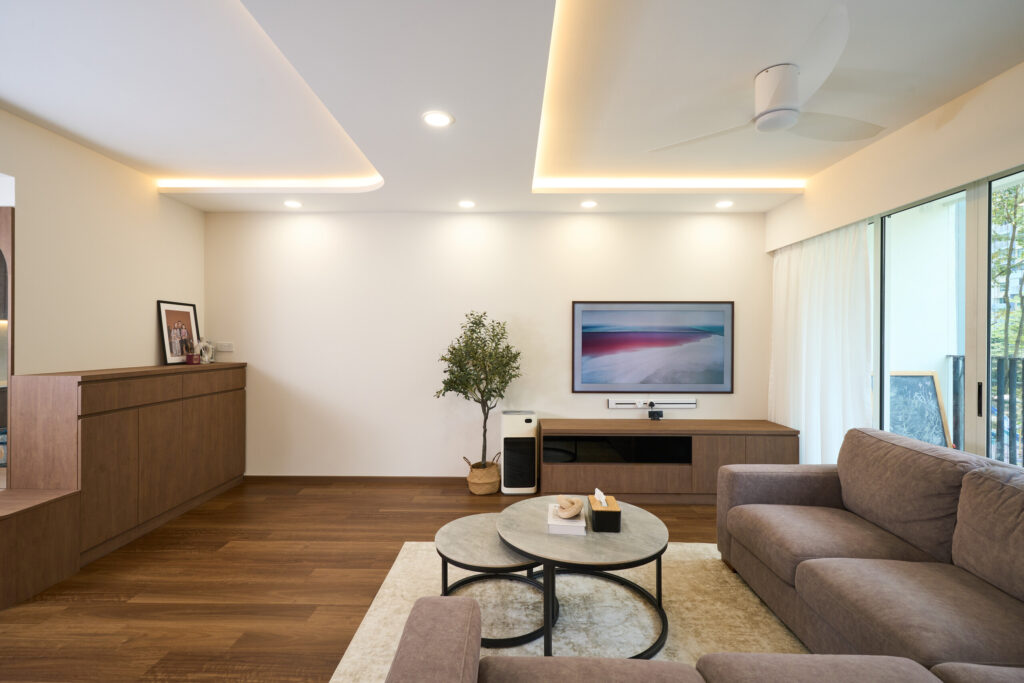
Plywood is the workhorse of Singapore kitchens and the material we recommend for most carcasses. It is made from thin layers of wood veneer glued together with the grain running in alternating directions. This cross-grain construction gives plywood excellent dimensional stability, meaning it resists the swelling and warping that humidity causes. Good quality plywood balances cost and durability well, which is why it is the standard choice for HDB BTOs and condos.
Within plywood, there are grades. Standard plywood with laminate offers medium to high moisture resistance at a moderate price. Phenolic or marine-grade plywood uses waterproof adhesives and offers superior water resistance, making it the better choice for areas around the sink and for homeowners who prioritise longevity.
E0-Grade Plywood
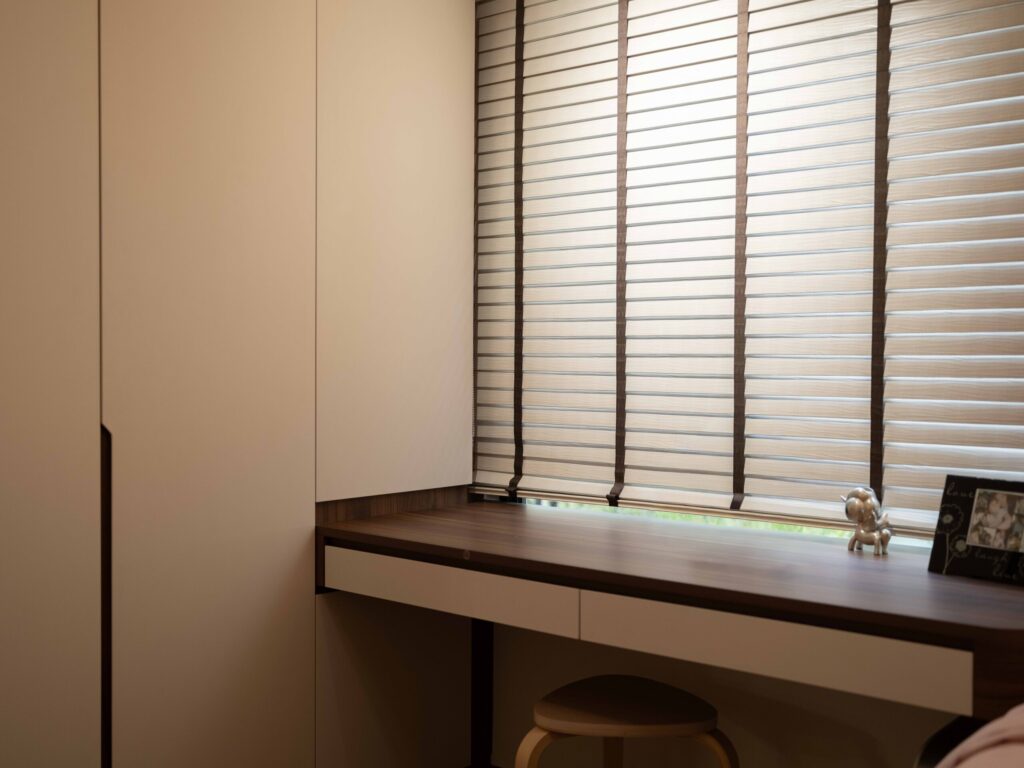
E0 plywood is plywood manufactured to the lowest formaldehyde emission rating available. Formaldehyde is a chemical used in many wood adhesives, and it can off-gas into the air inside enclosed spaces. In a kitchen, where the family spends a lot of time and where food is prepared, lower emissions matter. E0 plywood costs more than standard plywood but is worth considering for health-conscious households and families with young children.
MDF and Particleboard
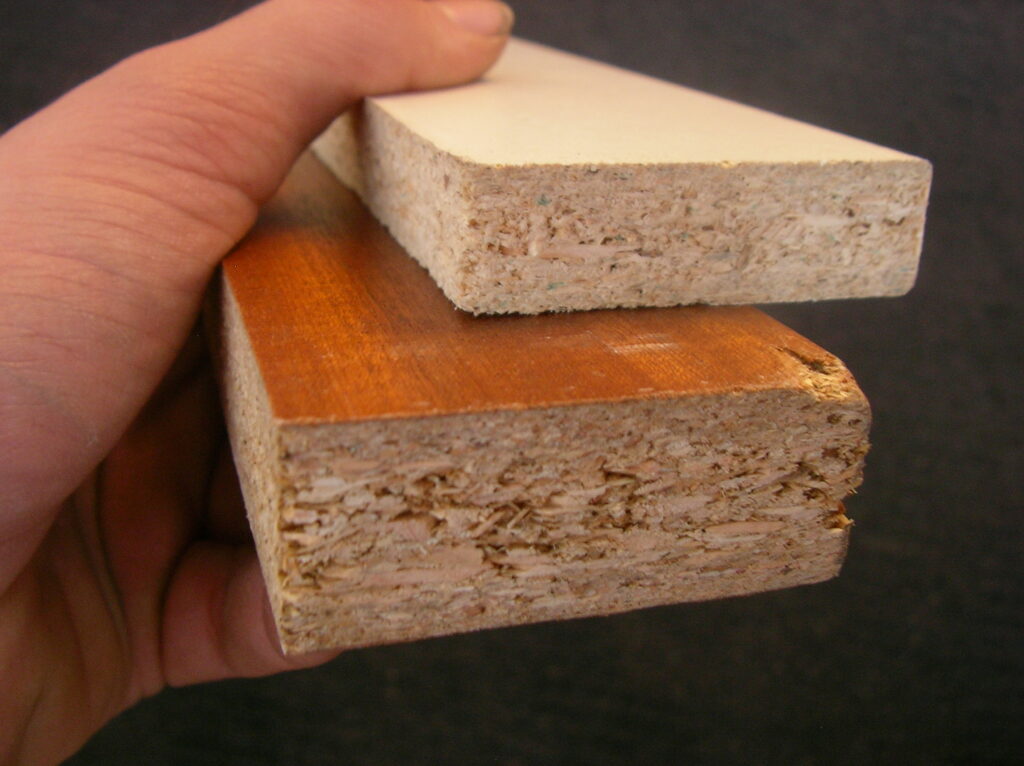
Medium-density fibreboard (MDF) and particleboard are the most budget-friendly carcass options, but they are also the most vulnerable to moisture. Standard MDF and particleboard absorb water and swell easily, which makes them a poor choice for Singapore kitchens unless a moisture-resistant grade is specified. If a quote seems unusually cheap, the carcass material is the first thing to check.
Cabinet Surface Finishes
Laminate
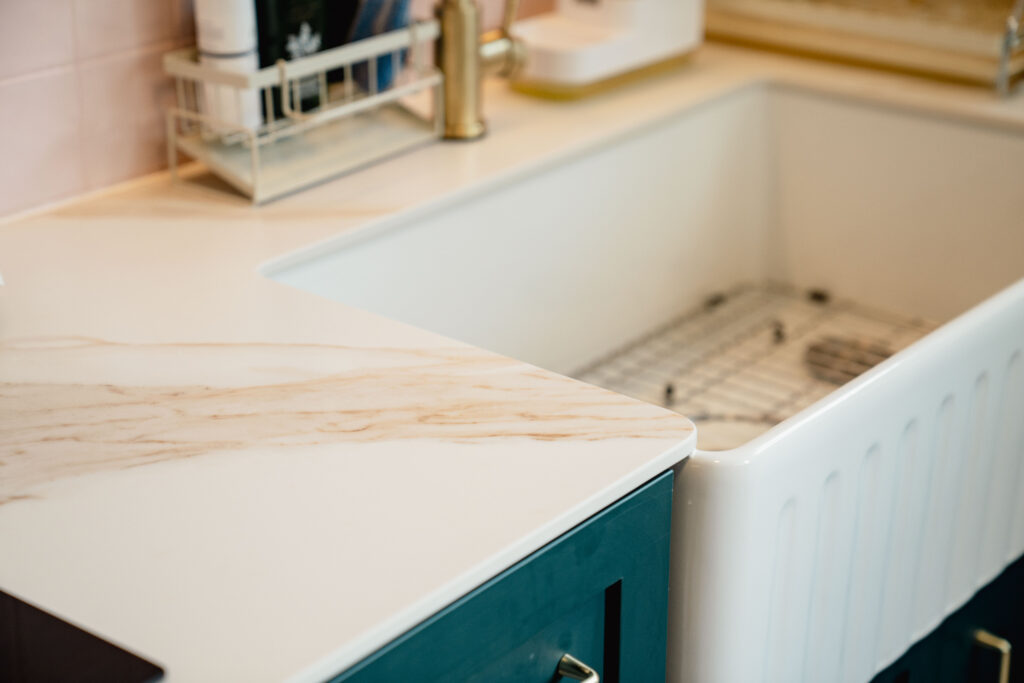
Laminate is the most popular surface finish for kitchen cabinets in Singapore, and for good reason. It is made from layers of paper and resin pressed together under heat and pressure, then bonded to the carcass. Laminate is affordable, comes in hundreds of colours and textures, and is easy to clean with a damp cloth. High-pressure laminate in particular is resistant to scratches, stains, and heat, which suits the demands of a busy kitchen. The main trade-off is that very cheap laminates can look flat, and poor edge banding can allow moisture in over time.
Acrylic
Acrylic finishes give a high-gloss, mirror-like surface that many homeowners love for a modern look. The trade-off is that gloss surfaces show fingerprints and fine scratches more readily, and acrylic costs more than laminate. Anti-fingerprint matte laminates have become a popular middle ground.
Solid Surface and Sintered Stone
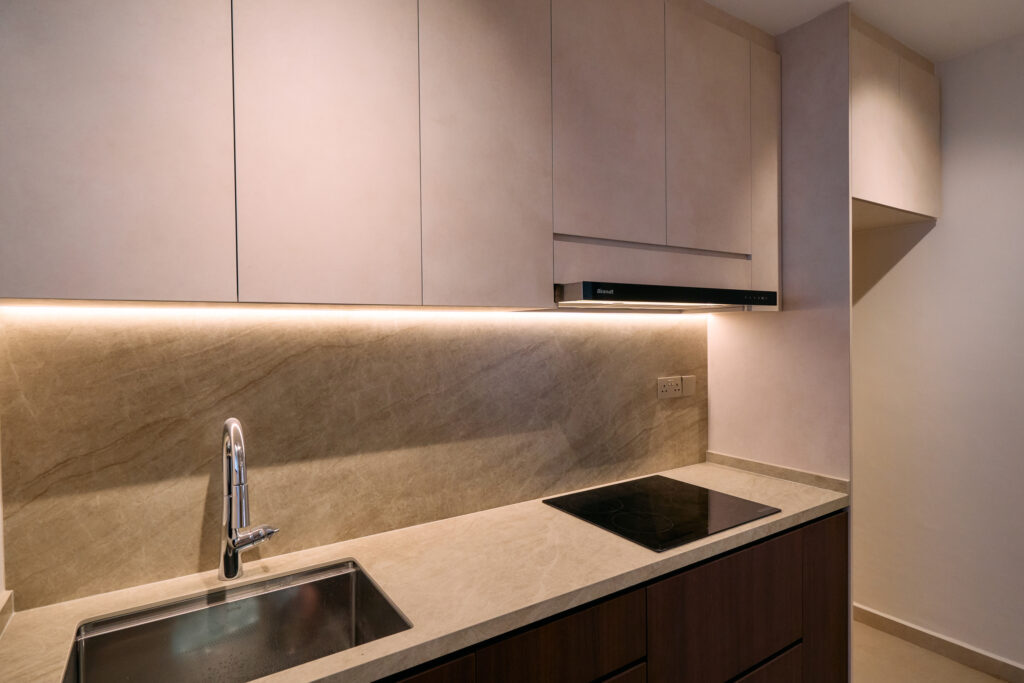
Solid surface is an engineered material made from acrylic or polyester resin blended with minerals. It is non-porous, seamless, and can mimic the look of natural stone without the maintenance. It is more commonly used for countertops than cabinet doors, but it can be used for both. It sits in the mid-to-high price tier. Sintered stone and similar premium surfaces offer outstanding durability and a seamless look but come at the highest price point, usually reserved for luxury projects.
Get Custom Kitchen Cabinets Built for the Singapore Climate
Material choice is only as good as the carpentry that brings it together.
At More Than Wood, our custom kitchen cabinet carpentry uses E0-grade plywood and quality hardware as standard, built and installed by our own team. If you are planning a kitchen renovation and want cabinets built to last in our humid climate, the material conversation is where we start.
Reach out for a consultation and we will walk you through the options for your specific kitchen.
0 comments