
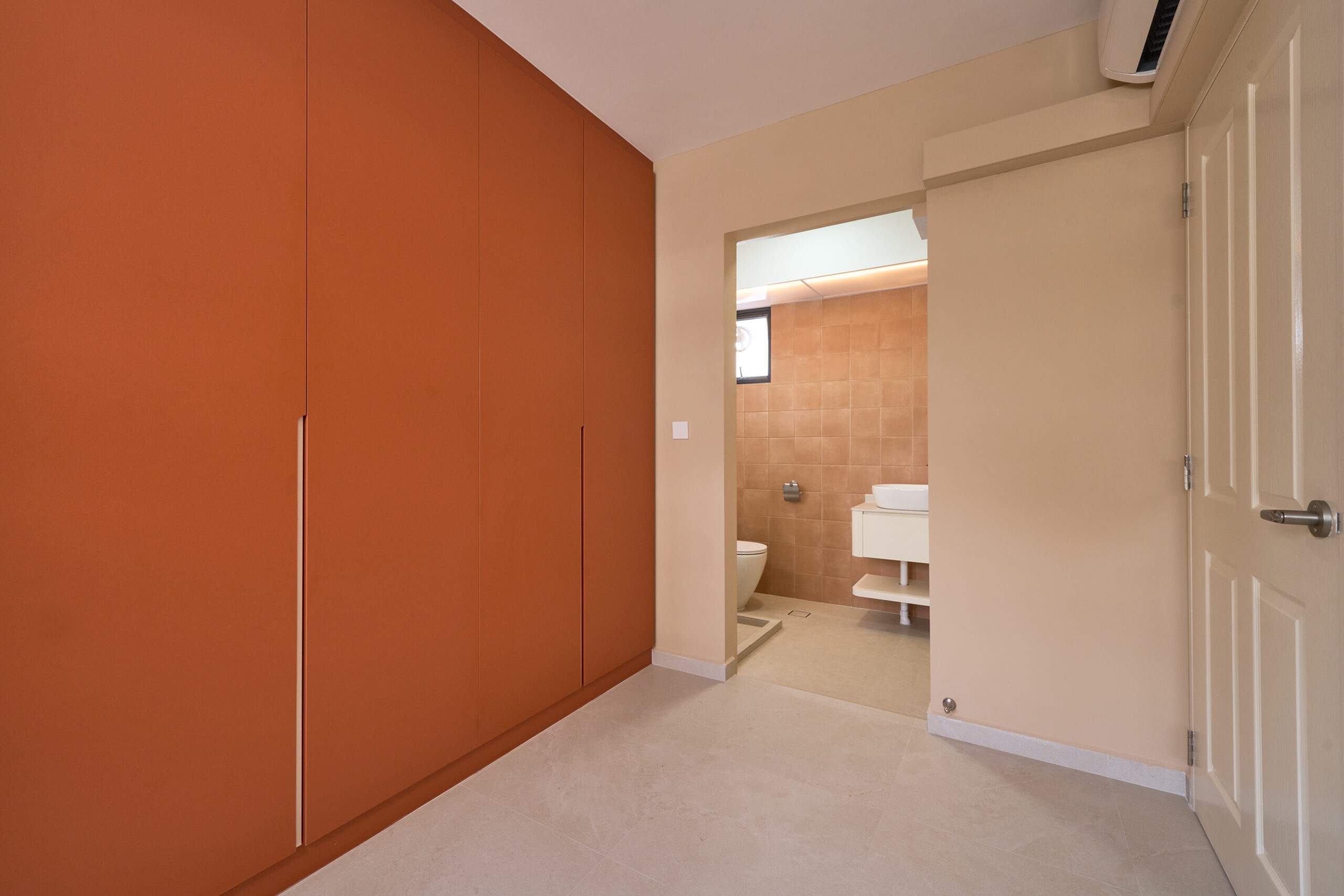
Sliding vs Swing Door Wardrobe: Which Is Better for Your Singapore Bedroom?
TL;DR: Sliding doors save clearance space and suit compact HDB bedrooms, but only show half the wardrobe at once and need occasional track maintenance. Swing doors give full visibility and are simpler to maintain, but need room to open. Choose based on how much clearance your bedroom actually has in front of the wardrobe.
Once you have decided on a built-in wardrobe, the next choice is the door type. Sliding doors and swing doors each have clear strengths, and the right one depends mostly on your room size and how you like to access your clothing.
In space-constrained Singapore bedrooms, this decision has a real impact on daily comfort. This guide compares the two so you can choose with confidence.
Swing Door Wardrobes
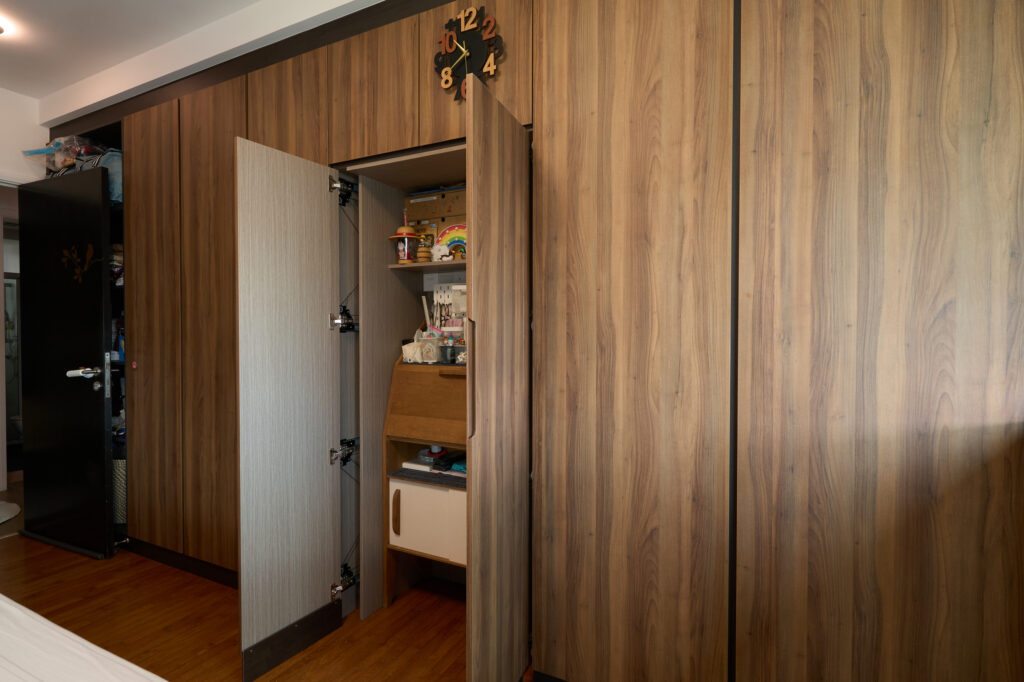
Swing door wardrobes, also called hinged or open-door wardrobes, have doors that open outward on hinges. They are the traditional choice and remain popular for good reasons.
Advantages
- Full access and visibility: when open, you see the entire contents of the wardrobe at once
- Simple, durable hardware: hinges are straightforward to maintain and inexpensive to repair or replace
- Design flexibility: a wide range of handles, finishes, decorative panels, and glass inserts to match your interior
- You can use the inside of the doors for mirrors or accessory racks
Drawbacks
Swing doors need clearance space in front of the wardrobe to open. In a tight bedroom, the outward swing can hit the bed or other furniture and limit how you arrange the room. If your bedroom is small, you must plan the wardrobe position carefully so the doors can open fully.
Sliding Door Wardrobes
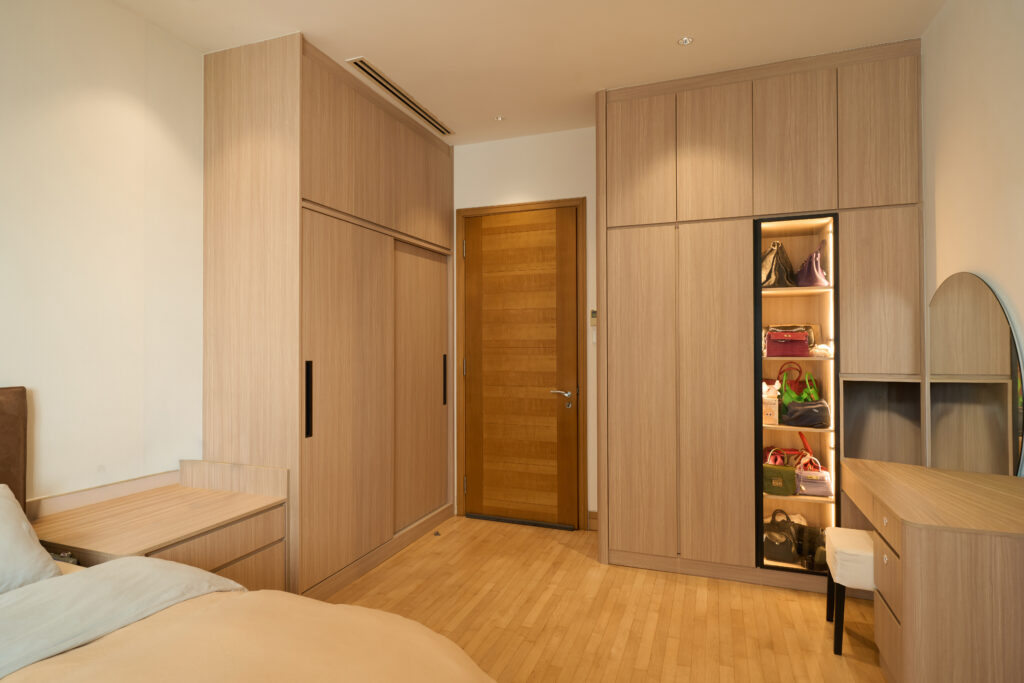
Sliding door wardrobes have doors mounted on tracks that glide horizontally. They are the modern choice and are particularly well suited to compact spaces.
Advantages
- Space-saving: the doors slide rather than swing, so you need no clearance in front of the wardrobe
- You can place a bed, chair, or other furniture right up against the wardrobe without blocking access
- Clean, contemporary look: sliding doors create a smooth, unbroken line across the wall
- Often available handleless or with minimal recessed grips for a sleek finish
Drawbacks
Sliding doors have trade-offs. You can only ever see half the wardrobe at once, because sliding one door open covers the other section. The tracks need occasional maintenance, since dust and lint gather in the bottom rail and can make the doors stick over time. Sliding systems also have more moving parts, and the doors can sag or come off the track if handled roughly. They are also generally more expensive than hinged doors due to the track system.
How to Choose
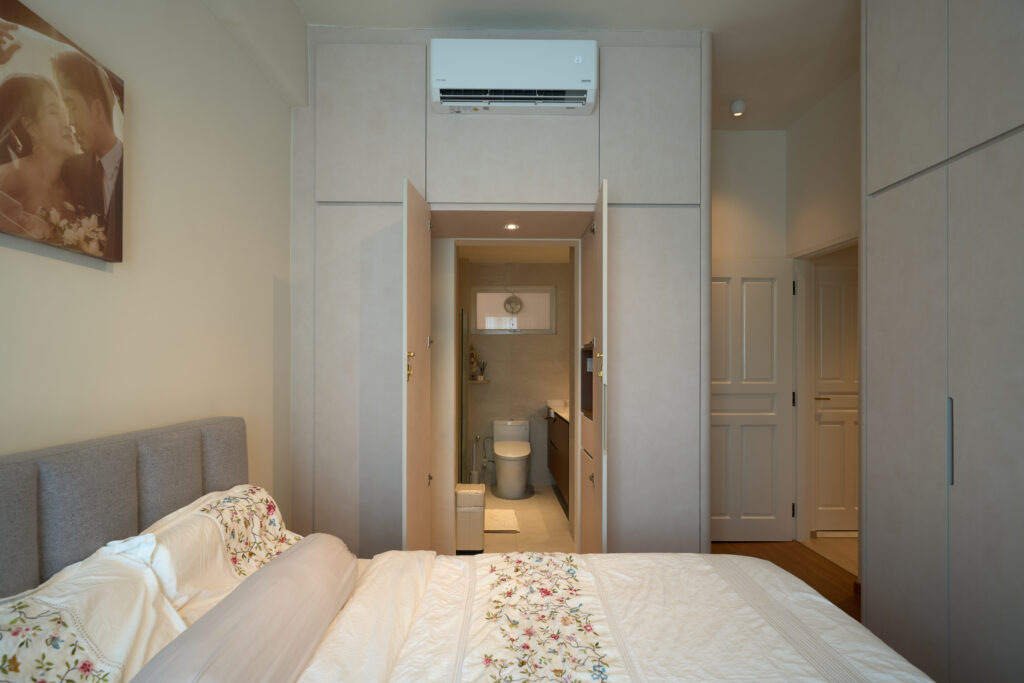
The decision usually comes down to room size and personal preference.
Choose a swing door wardrobe if you have enough clearance in front of the wardrobe, you want to see all your clothing at once, you prefer a classic look, or you like using the back of the doors for storage. Swing doors also tend to be the more budget-friendly option.
Choose a sliding door wardrobe if your bedroom is tight on space, you want furniture to sit close to the wardrobe, or you prefer a sleek, modern, handleless aesthetic. In a typical HDB master bedroom of 12 to 15 square metres where a bed, wardrobe, and side tables all need to fit, sliding doors often save the crucial clearance space that makes the room comfortable to move around in.
Consider the Whole Room
When planning, think about the full bedroom layout, not just the wardrobe in isolation. Position the bed against the longest wall first, leaving at least 60cm on each accessible side for comfortable movement. Then plan the wardrobe so its doors, whichever type, do not interfere with the bed or block walkways. In landed homes and larger condos with more clearance, a swing door can feel more substantial and balanced, so there is no need to force a sliding system purely because it is fashionable.
Frequently Asked Questions
Are sliding doors better than swing doors for small HDB bedrooms?
For most small HDB bedrooms, yes. Sliding doors need no clearance in front of the wardrobe to open, which lets you place the bed or other furniture right up against it. This is often the deciding factor in a room of 12 to 15 square metres where every centimetre of floor space matters.
Do sliding wardrobe doors let you see the whole wardrobe at once?
No. Because one door slides behind the other to open, you can only ever see half the wardrobe’s contents at a time. Swing doors give full visibility of everything at once, which some people find more convenient for choosing an outfit.
How much maintenance do sliding wardrobe doors need?
Sliding doors run on tracks that collect dust and lint over time, particularly in the bottom rail, which can make the doors feel sticky or rough if not cleaned occasionally. Swing doors use simple hinges that need very little upkeep beyond the occasional tightening.
Which wardrobe door type is cheaper, sliding or swing?
Swing doors are generally less expensive because the hinge hardware is simpler than a sliding track system. Sliding doors cost more due to the added complexity of the track mechanism, though many homeowners consider the space savings worth the difference in a compact bedroom.
How much clearance does a swing door wardrobe need in front of it?
The exact clearance depends on the door width, but as a general rule you need enough open floor space for the door to swing fully outward without hitting the bed or other furniture. If your bedroom cannot comfortably provide this, a sliding door wardrobe is usually the more practical choice.
Build the Right Wardrobe for Your Space
Both door types can be built beautifully when the wardrobe is designed around your room. At More Than Wood, our custom wardrobe carpentry includes both sliding and swing door systems, and we recommend the right type based on a site visit to your bedroom. We build to your exact measurements with quality hardware so the doors run smoothly for years. Reach out for a consultation and we will help you choose the door type that suits your space.
0 comments